
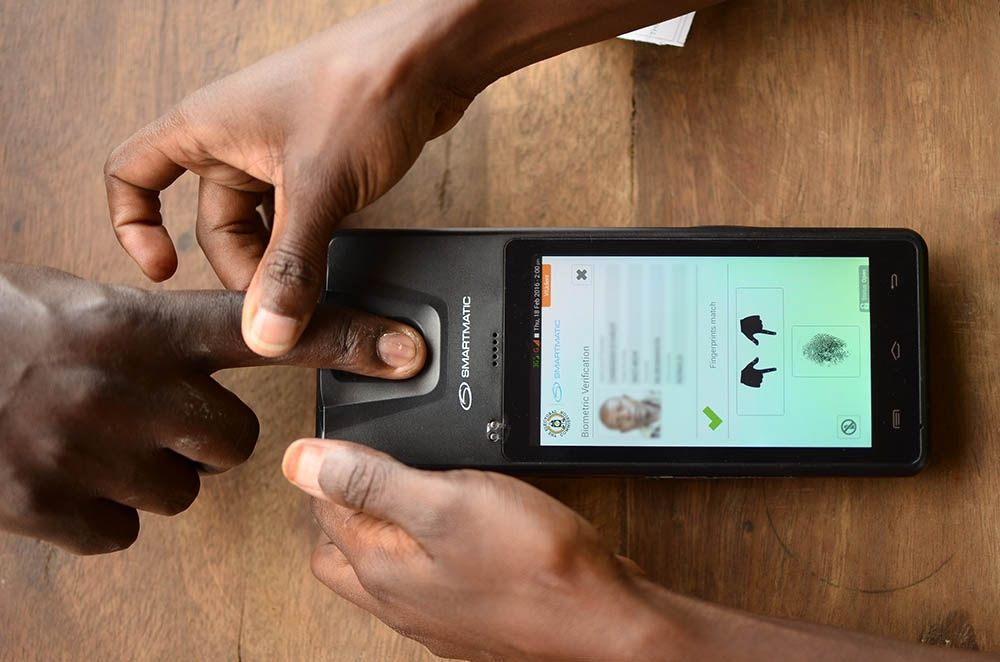
As Uganda concludes the 2026 general election cycle, Biometric Voter Verification Kits have emerged as a defining feature of election administration, with the Electoral Commission citing their role in enforcing voter authentication, reducing malpractice, and modernising polling operations across the country.
The Biometric Voter Verification Kits (BVVKs) have taken centre stage in Uganda’s 2026 general elections, becoming one of the most consequential technologies deployed by the Electoral Commission in managing voter authentication and polling day operations.
Introduced as part of broader reforms to strengthen transparency, accuracy, and credibility, the BVVKs are designed to ensure that only registered voters participate in elections.
The machines verify voter identity using biometric data, primarily fingerprints and, where necessary, facial recognition, by matching details against the national voters’ register.
For the 2025/2026 electoral cycle, the Electoral Commission procured 109,142 BVVK machines for deployment across more than 50,000 polling stations nationwide.
Election officials indicated that each polling station would be allocated two machines to improve efficiency and reduce delays, a measure informed by challenges experienced in previous elections.
The technology was rolled out progressively throughout the election calendar, beginning with the presidential and parliamentary elections held on January 15, and extending to subsequent polls for district leaders, mayors, and lower local government structures.
During the most recent voting exercises, including lower local government elections, reports from several districts indicate that the machines largely functioned as intended, particularly in areas where deployment and logistical arrangements were properly managed.
In such locations, voter verification proceeded smoothly, with minimal interruptions.
At polling stations, voters are required to place their fingerprint on the device, which scans and cross-checks the biometric data against the voters’ register before authorising the issuance of a ballot paper.
The process is aimed at reinforcing the “one person, one vote” principle by preventing multiple voting and impersonation.
The Electoral Commission has consistently defended the adoption of biometric verification, arguing that the technology is critical to curbing electoral malpractices and enhancing public confidence in the electoral process.
Ahead of polling, the Commission conducted demonstrations for political parties, civil society organisations, election observers, and the media as part of efforts to build trust in the system.
As the final phases of the electoral cycle continue, including special interest group elections such as the national female youth Member of Parliament vote, the BVVK system remains central to voter authentication and polling day management.
While debate persists around broader election management issues, the 2026 cycle represents one of the most extensive deployments of biometric voter verification technology in Uganda’s electoral history, a shift the Electoral Commission says is aimed at modernising election administration and strengthening institutional credibility.
